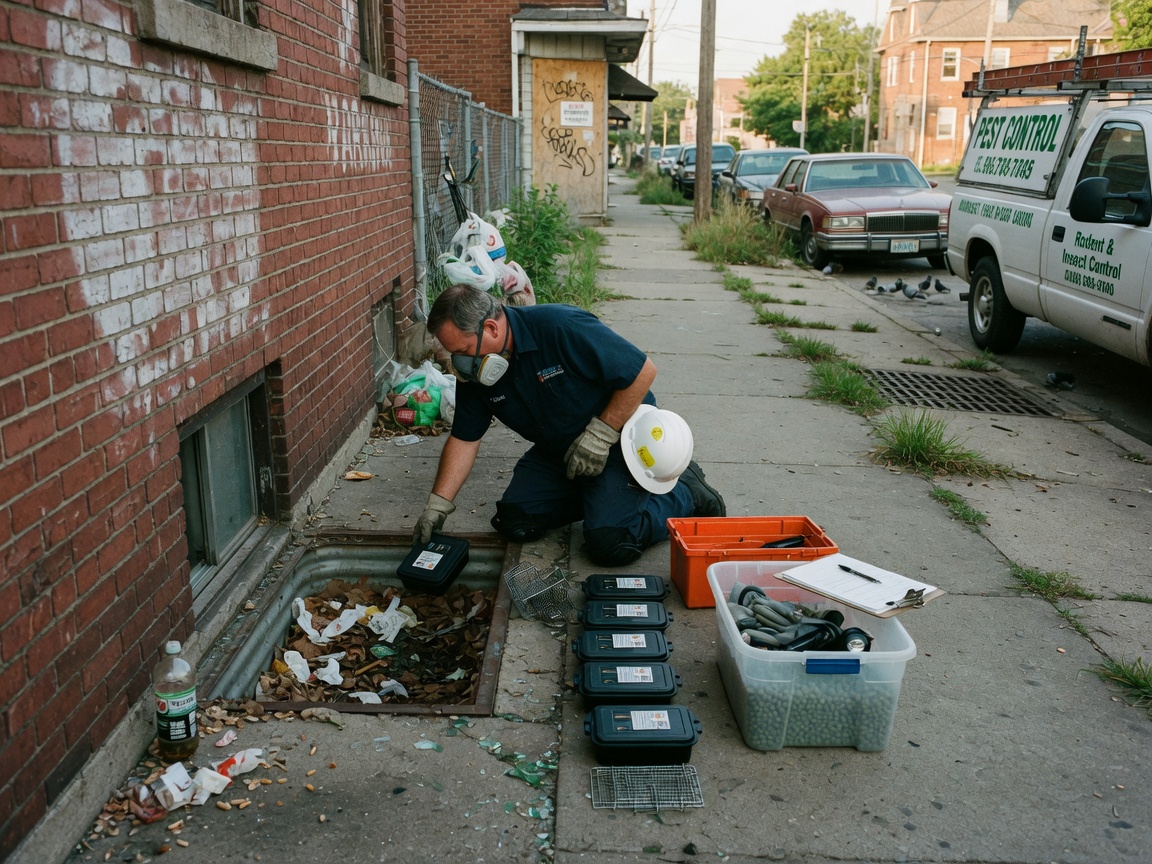
Detroit's older brick and frame homes in neighborhoods like Corktown, Boston-Edison, and Indian Village often feature stone foundations, coal chutes, and unsealed utility entries that give mice and Norway rats easy access. Cold winters push rodents from sewers and exterior debris piles into basements and wall voids, while warm summers increase outdoor foraging around Eastern Market and Belle Isle Park. Technicians focus on locating these entry points rather than relying solely on bait, because untreated openings allow constant re-infestation from adjacent properties in dense blocks.
Service calls frequently involve properties near Hamtramck and Dearborn where mixed residential and commercial buildings create travel corridors along alleys and rail lines. Exclusion work uses copper mesh and steel wool packed into gaps around pipes and vents, followed by tamper-resistant stations placed along runways in crawl spaces. In Wayne County homes with finished basements, crews check behind drywall and under insulation where droppings collect out of sight, preventing hidden damage to wiring and ductwork.
Follow-up visits confirm activity has stopped before sealing final openings, because premature closure can trap rodents inside and create odor issues. Technicians note that properties near Campus Martius Park and Midtown see higher roof rat pressure during mild winters when ivy and tree canopies provide cover. All work stays within standard Michigan pest management guidelines without any licensing claims beyond the operator's local experience.
Technician insight
In Detroit, the thing that catches most people out with Rodent Control is skipping exterior sealing around old coal chutes and utility entries in neighborhoods like Boston-Edison and Woodbridge. Cold winters drive rodents inside from alleys and sewers, but without blocking those gaps the problem returns every season regardless of how many bait stations you set.
Corktown Basement Mice
Homeowner noticed droppings near the furnace in a 1920s Corktown house. Inspection found gaps around the sewer line and foundation vents allowing mice entry during early winter. Crew installed stations along the runways, sealed the openings with mesh and caulk, and returned once to confirm activity stopped.
Rodent Control Services We Offer
✓House Mouse Removal
Locates and eliminates house mice common in Detroit kitchens and pantries using targeted bait placement and entry-point sealing suited to older Wayne County homes.
✓Norway Rat Control
Addresses Norway rats entering basements and garages from sewers and alleys in neighborhoods like Mexicantown and Woodbridge with heavy-duty stations and structural repairs.
✓Attic Rodent Cleanup
Removes nesting material and droppings from attics in Boston-Edison and Palmer Park homes while installing exclusion to stop re-entry during cold months.
✓Basement Rodent Proofing
Seals foundation cracks and utility penetrations in Corktown and Indian Village properties to block mice and rats driven indoors by winter weather.
✓Commercial Rodent Management
Provides ongoing monitoring and exclusion for businesses near Eastern Market and Comerica Park where food waste and foot traffic increase rodent pressure.
Rodent Control Cost in Detroit, MI
| Service | Typical Range | What Affects It |
|---|---|---|
| Initial Rodent Inspection | $75–$150 | Includes detailed report; higher for multi-unit buildings in Midtown or Corktown. |
| Standard Residential Treatment | $200–$450 | Covers most single-family homes; price rises with attic or crawl-space access needs. |
| Exclusion and Sealing | $150–$600 | Varies by number of openings and materials required for older Detroit foundations. |
| Follow-Up Visit | $75–$125 | Scheduled after initial treatment; often included in package pricing. |
Ranges are typical for Detroit, MI and confirmed with an exact written quote before any work starts.
How it works
- 1
Property Inspection
Technician examines exterior and interior for entry points, runways, and droppings while noting conditions specific to Detroit's older housing and seasonal weather patterns.
- 2
Targeted Treatment
Places tamper-resistant bait stations and traps along confirmed pathways in basements, attics, and crawl spaces without disturbing daily household activity.
- 3
Exclusion Work
Seals identified openings with durable materials that withstand Detroit's freeze-thaw cycles and prevents new rodents from entering from nearby structures.
- 4
Follow-Up Monitoring
Returns on schedule to check stations, remove any trapped rodents, and confirm activity has ended before final sealing.
Pricing
Cost depends on property size, infestation level, and number of follow-up visits required.